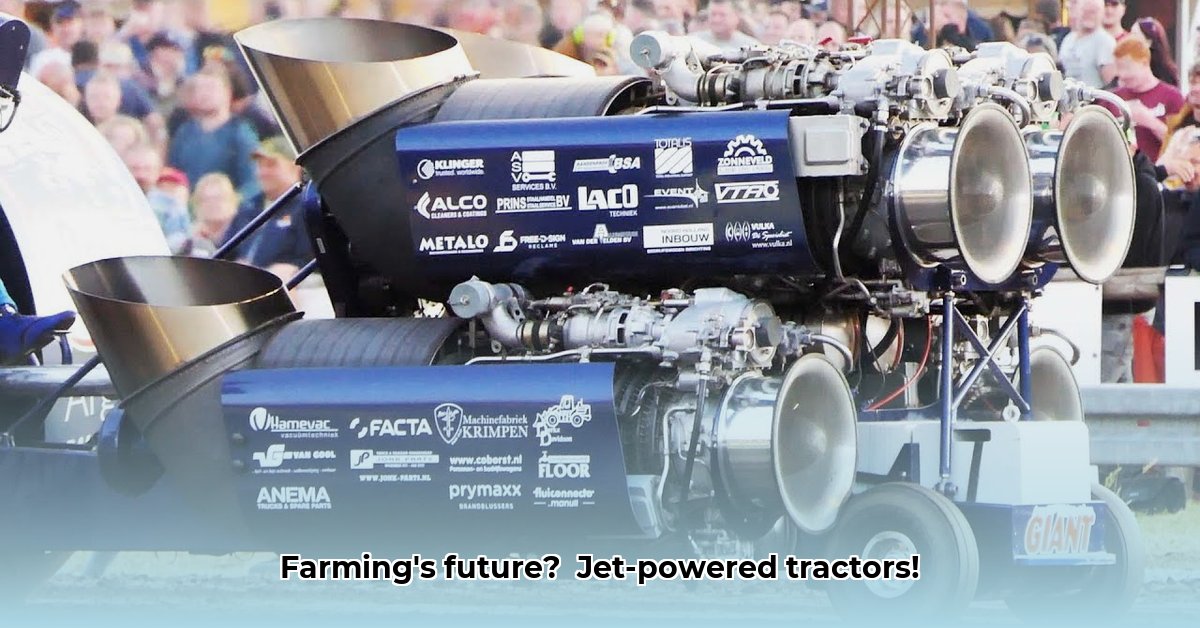
The Dawn of 12,000 Horsepower on the Farm
Imagine a tractor with the raw power of a jet plane—capable of pulverizing fields with earth-shattering force. This isn’t science fiction; jet engine tractors are here, promising a potential revolution in agricultural productivity. But this groundbreaking technology presents a complex equation, balancing immense power with significant environmental and economic challenges. This article explores the potential and perils of this powerful new farming tool. For more detailed specifications, check out this resource.
Tractor Pulling Jet Engines: A Powerhouse Unveiled
Videos showcasing these behemoths are breathtaking. Twelve thousand horsepower – a force capable of moving mountains – is harnessed in a single machine. This isn't your grandfather's tractor; it's a technological marvel capable of performing heavy-duty tasks at unprecedented speeds. But can this raw power translate into practical, profitable farming?
Productivity: A Potential Game Changer?
The potential for increased agricultural productivity is undeniable. Tasks like land preparation and material movement, traditionally time-consuming, could be completed in a fraction of the usual time. Imagine the impact on large-scale operations—vast fields prepared for planting in hours, not days. However, can this theoretical boost translate into real-world efficiency gains? More data is needed to substantiate these claims fully.
Cost and Efficiency: A Steep Price of Progress?
The high cost of acquiring and operating a jet engine tractor is a significant hurdle. The initial investment would be substantial, while the cost of fuel—jet fuel is far from cheap—would be astronomical. Maintenance and repairs would require specialized expertise and parts, adding further financial strain. Will the increased yield offset these exorbitant costs? Currently this remains an open question.
Environmental Impact: A Necessary Consideration
The environmental footprint of jet engine tractors is a critical concern. Traditional jet engines are notorious for high greenhouse gas emissions and noise pollution. While the potential to transition to sustainable biofuels exists, this technology is still far from mainstream. The current environmental impact is substantial, posing a significant hurdle to widespread adoption.
Technological Maturity: A Work in Progress
Jet engine tractors are currently in a nascent stage of development. While prototypes demonstrate their capabilities, large-scale adoption is far off. Key challenges remain: How will they perform on diverse terrains? How adaptable are they to the nuanced demands of precision farming? These questions need to be addressed before widespread implementation.
Stakeholder Perspectives: A Collaborative Effort
Dr. Anya Sharma, Agricultural Engineering Professor at Cornell University, notes, "While the potential for increased efficiency is significant, we must carefully assess the environmental and economic implications before widespread adoption. Sustainable fuel solutions are critical."
Farmers express both excitement and caution. Mark Johnson, a large-scale farmer in Iowa, states, "The power is undeniable, but the cost is a major concern. We need reliable data on long-term efficiency and ROI before investing." Environmental groups are understandably wary of the potential for increased emissions and noise pollution. A collaborative dialogue between all stakeholders is essential to responsibly guide the trajectory of this technology.
The Future of Farming: A Cautious Optimism
Jet engine tractors represent a significant leap in agricultural technology, capable of potentially revolutionizing the industry. However, considerable challenges remain. More research and development are needed to create cost-effective and environmentally sustainable versions of this technology. The development of cleaner fuel alternatives is crucial. Only through careful consideration of the environmental and economic ramifications can we harness the full potential of this impressive technology.
Three Pivotal Points:
- The immense power of jet engine tractors offers the potential for significant increases in farming efficiency.
- The high cost of fuel, maintenance, and acquisition presents a substantial barrier to widespread adoption.
- Significant environmental concerns related to emissions and noise pollution necessitate careful evaluation and the development of sustainable alternatives.
Steps for Assessing Environmental Impact:
- Fuel Consumption Measurement: Quantify fuel used per unit of work.
- Emission Quantification: Measure greenhouse gases and pollutants.
- Noise Level Assessment: Evaluate noise levels against regulations.
- Soil Impact Analysis: Assess compaction and erosion.
- Life Cycle Assessment (LCA): Conduct a comprehensive LCA.
- Comparative Analysis: Compare to traditional tractors.